


Blog
How To Wash A Letterman Jacket Without Damaging It
Apr
How to Wash a Letterman Jacket Without Damaging It: The Ultimate Guide
Your Letterman Jacket is a wearable archive of your hardest-earned memories, from stadium lights to late night rehearsals. That classic wool and leather combo is built to last, but the thought of cleaning it can be genuinely stressful. Nobody wants to risk a shrunken mess or ruined sleeves after one accidental laundry mishap. It feels like a high-stakes task, but with a gentle touch and the right approach, you can keep those memories fresh without losing the jacket’s soul.
At Starlet Leathers, we believe that premium outerwear should be treated with respect. In this comprehensive guide, we’re going to walk you through everything you need to know about maintaining your varsity jacket without sending it to an early grave.
Understanding the Anatomy of Your Jacket
Before you even touch a drop of water, you have to understand what you’re dealing with. A classic letterman jacket is a multimedia garment, usually consisting of:
- The Body: Typically made of melton wool. Wool is warm and durable but extremely sensitive to heat and agitation.
- The Sleeves: Usually high-quality cowhide or sheepskin leather (though some modern versions use vinyl or faux leather).
- The Trim: Ribbed knit cotton or synthetic blends at the collar, cuffs, and waistband.
- The Patches (Chenille): These are the fuzzy letters and awards. They are delicate and can easily lose their texture if handled roughly.
Because these materials react differently to moisture and heat, a one size fits all washing approach will almost certainly damage the jacket.
Why You Should (Almost) Always Avoid the Washing Machine
It’s tempting to just toss your jacket in the machine on a delicate cycle and hope for the best. Don’t do it. Here is why the washing machine is the natural enemy of the Varsity Jacket:
- Leather Saturation: Leather should never be fully submerged in water for an extended period. It strips the natural oils, causing the sleeves to become stiff, brittle, and prone to cracking.
- Wool Shrinkage: Even cool water combined with the mechanical agitation of a washing machine can cause wool fibers to felt and shrink significantly.
- Color Bleeding: The high-contrast colors (like a white leather sleeve against a navy wool body) are notorious for bleeding. A machine wash increases the risk of your white sleeves turning a permanent shade of light blue.
Step-by-Step Guide: The Safe Way to Clean
If your jacket has a few battle scars from daily wear, follow this localized cleaning method to keep it fresh.
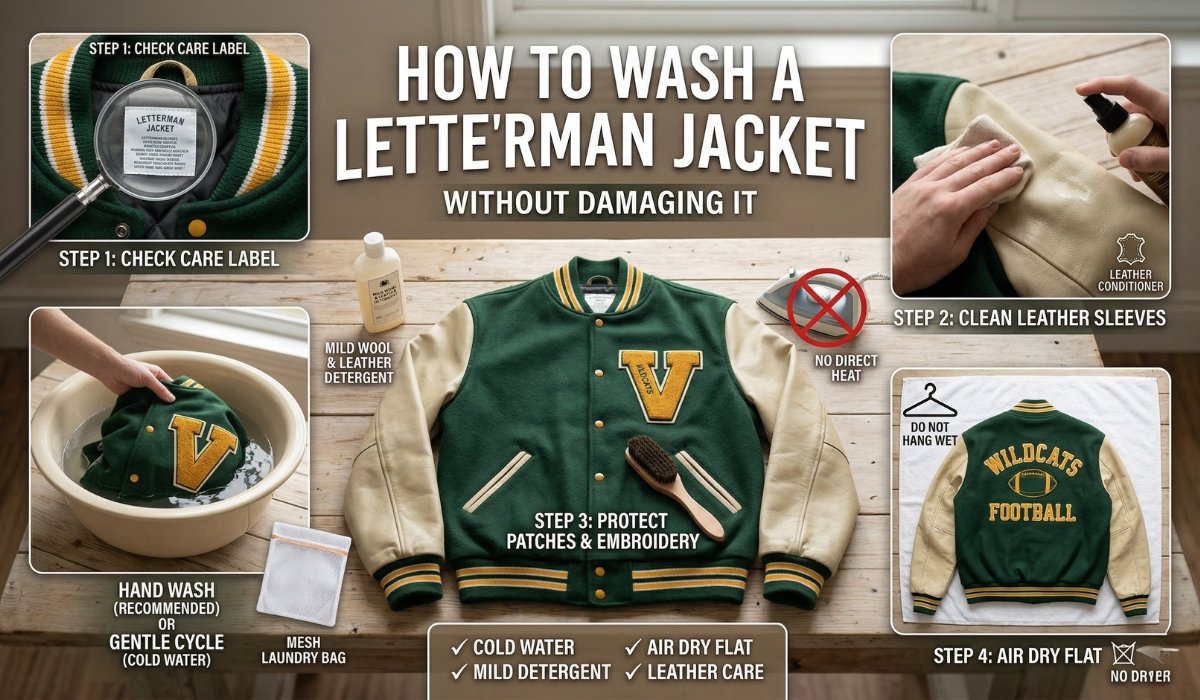
1. Spot Cleaning the Wool Body
For the wool section, use a soft-bristled clothes brush first. This removes surface dust and dried mud without using any liquid. If there’s a persistent stain:
- Mix a small amount of wool-safe detergent with lukewarm water.
- Dip a microfiber cloth into the solution and wring it out until it’s just damp.
- Dab (don’t rub) the stain until it lifts.
2. Cleaning the Leather Sleeves
Leather requires a specific touch. Use a dedicated leather cleaner or a very mild, pH-balanced soap.
- Apply the cleaner to a cloth, not the leather directly.
- Wipe the sleeves in a circular motion.
- Immediately follow up with a dry cloth to remove excess moisture.
- Pro Tip: Always apply a leather conditioner afterward to keep the skin supple.
3. Reviving the Chenille Patches
Those fuzzy letters act like sponges for dust. To clean them, use a slightly damp cloth to blot away dirt. If the fuzz looks flattened, you can very gently use a soft toothbrush to fluff the fibers back up once they are dry.
Difference Between Professional Dry Cleaning and Home Care
A common question we get at Starlet Leathers is whether the dry cleaner is always the safest bet. The answer is: It depends.
| Feature | Home Spot Cleaning | Professional Dry Cleaning |
| Cost | Practically Free | Expensive ($30 – $60+) |
| Risk | Low (if careful) | Moderate (if they aren’t leather specialists) |
| Effectiveness | Great for minor stains | Best for deep odors and oils |
| Convenience | Instant | Takes 3-7 days |
A Word of Caution: If you take your jacket to a dry cleaner, ensure they have experience with leather and wool combinations. Standard dry cleaning chemicals can sometimes strip the oils from leather sleeves if they aren’t processed correctly.
How to Deodorize Your Jacket Without Water
Sometimes the jacket isn’t dirty, it just smells like… well, a locker room. Since you can’t wash it easily, try these tricks:
- The Steamer: Use a handheld garment steamer on the wool sections only. The heat kills odor-causing bacteria without soaking the fabric. Keep the steamer away from the leather!
- Vodka Spray: A secret of theater costume designers. Lightly mist the interior lining with unflavored vodka. As the alcohol evaporates, it takes the odors with it.
- Baking Soda: Lay the jacket flat and sprinkle baking soda inside the lining. Let it sit overnight and vacuum it out the next morning.
Drying and Storage: The Final Vital Steps
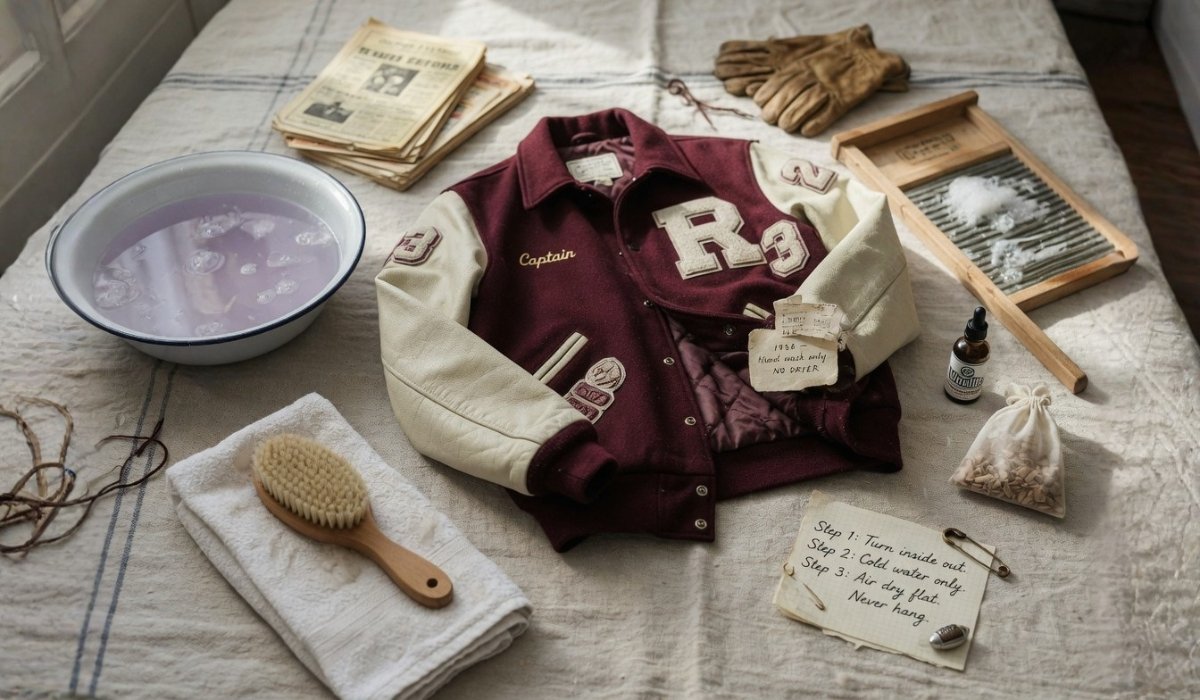
If your jacket does get wet (perhaps you got caught in a rainstorm), never put it in the dryer. The heat will ruin the leather and shrink the wool instantly.
- Drying: Lay the jacket flat on a clean, light-colored towel. Reshape it while it’s damp. Let it air dry away from direct sunlight or heaters.
- Storage: Use a wide, padded hanger. Thin wire hangers will poke the shoulders and ruin the silhouette of the heavy leather sleeves over time. Store it in a breathable garment bag never plastic, as leather needs to breathe to prevent mold.
Frequently Asked Questions (FAQs)
Q: Can I use a hair dryer to speed up the drying process?
A: Absolutely not. Direct heat is the fastest way to crack leather and warp wool. Patience is your best friend here.
Q: My white leather sleeves are yellowing. Can I bleach them?
A: Never use bleach on leather or wool. For yellowing leather, try a specialized leather whitener or take it to a professional leather restorer.
Q: How often should I clean my letterman jacket?
A: If you wear it regularly, a deep spot clean and leather conditioning should happen once a season. Over-cleaning can actually wear down the fibers faster.
Q: Can I iron my varsity jacket?
A: You should generally avoid ironing. If the wool is very wrinkled, use a steamer. If you must iron, use the lowest setting, no steam, and place a heavy pressing cloth between the iron and the wool. Never iron the leather or the patches.
Why Quality Matters
When you pick up something from Starlet Leathers, you’re getting a piece that’s actually built to go the distance. We use high end melton wool and genuine top-grain leather because they don’t just look better they’re naturally tougher. Unlike cheap synthetic fabrics that fall apart or stain forever after one mishap, these quality materials are surprisingly resilient. It makes looking after your jacket a whole lot easier, so you can spend less time worrying about repairs and more time actually wearing it.
Treat your jacket well, follow these steps, and your letterman will look just as good at your 20th reunion as it did on graduation day.
Ready for a new look? Browse our latest collection of premium leather and varsity styles at Starlet Leathers today!
