


Blog
How To Remove Mould From Suede Leather Jacket At Home
Jun
How To Remove Mould From Suede Leather Jacket At Home By STARLET LEATHERS
There are few wardrobe items that match the effortless cool of a premium suede leather jacket. It is soft, textured, and elevates almost any outfit instantly. However, that beautiful texture comes with a catch. Unlike finished, smooth leather, suede is highly porous and possesses a raised nap (the fuzzy surface layer) that acts like a magnet for moisture.
If you have pulled your favorite jacket out of the back of a damp closet only to discover a fuzzy, pale green or white layer dusting its surface, your heart probably sank.
Discovering mold or mildew on your premium outerwear is incredibly frustrating, but it does not mean your jacket is ruined. At Starlet Leathers, we believe that premium quality garments deserve top tier care. You do not need to spend a fortune at a specialized dry cleaner to fix this issue. With patience, precision, and the right everyday home items, you can safely remove mold from a suede leather jacket at home without ruining its iconic texture.
Buy Mens Suede Leather Jacket From Starlet Leathers!
Understanding the Enemy: Why Suede is Vulnerable
To treat mold effectively, it helps to understand exactly what you are dealing with and why your jacket became its target.
Mold and mildew are types of fungi that reproduce through microscopic airborne spores. These spores exist everywhere around us in nature and indoors, remaining completely harmless until they find the ideal environment to settle and grow. Fungi require three main conditions to thrive:
- Moisture or High Humidity: Any trapped water vapor, rain residue, or general atmospheric dampness.
- Lack of Air Circulation: Stagnant air found in tightly packed wardrobes, storage bins, or plastic garment bags.
- An Organic Food Source: Organic materials like natural fibers, animal skins, and leather.
Because suede is crafted from the soft underside of animal hide, it lacks the tough, protective grain barrier found on smooth leather. The open, fibrous nap absorbs ambient moisture out of the air. If you store a suede jacket when it is even slightly damp or place it in an unventilated wardrobe fungal spores will anchor deep down into the fibers.
Mold vs. Mildew: What Is Growing on Your Jacket?
While people often use these terms interchangeably, mold and mildew have slightly different growth patterns. Knowing the difference helps you judge the severity of the issue.
Mildew
Mildew is a superficial, early stage fungal growth. It typically appears flat, powdery, and is usually white, light grey, or pale yellow. It sits purely on top of the suede nap and is significantly easier to clean because its root structures have not penetrated deep into the leather fibers.
Mold
Mold is a more advanced, aggressive fungus. It looks fuzzy, slimy, or velvety and can display much darker colors, including forest green, deep brown, blue, or pitch black. Mold penetrates deep beneath the surface nap of your suede jacket to feed on the organic proteins. If left untreated, mold can structurally weaken the leather, causing irreversible rot, deep stains, and permanent structural damage.
| Feature | Mildew | Mold |
| Appearance | Flat, powdery, dusty layer | Fuzzy, velvety, or slimy patches |
| Color Spectrum | White, light grey, soft yellow | Green, dark blue, brown, or black |
| Penetration Depth | Strictly superficial (surface nap) | Deeply rooted within leather pores |
| Damage Risk | Low; mostly cosmetic | High; causes rot, structural weakening, and staining |
| Odor Intensity | Mildly musty | Intensely pungent, damp, and earthy |
Smooth Leather vs. Suede: Why You Cannot Clean Them the Same Way
If you find mold on a smooth, full grain leather biker jacket, the cleanup is relatively simple. You can confidently wipe down the surface with a damp soapy cloth, rub it with a leather cleaner, or use an alcohol mix because smooth leather has a sealed, resilient surface grain.
Buy Womens Suede Leather Jacket From Starlet Leathers!
Suede is entirely different.
Never apply heavy liquids, saturated soapy water, or harsh direct chemicals to suede. Suede absorbs liquids rapidly. If you soak a suede jacket to clean mold, you will simply drive the fungal spores deeper into the core of the hide. Additionally, excessive water causes the natural oils inside suede to evaporate as it dries, leaving your jacket stiff, cracked, and completely ruined.
Cleaning suede requires a specialized, dry to low moisture approach that lifts the fungus while preserving the delicate, soft texture of the nap.
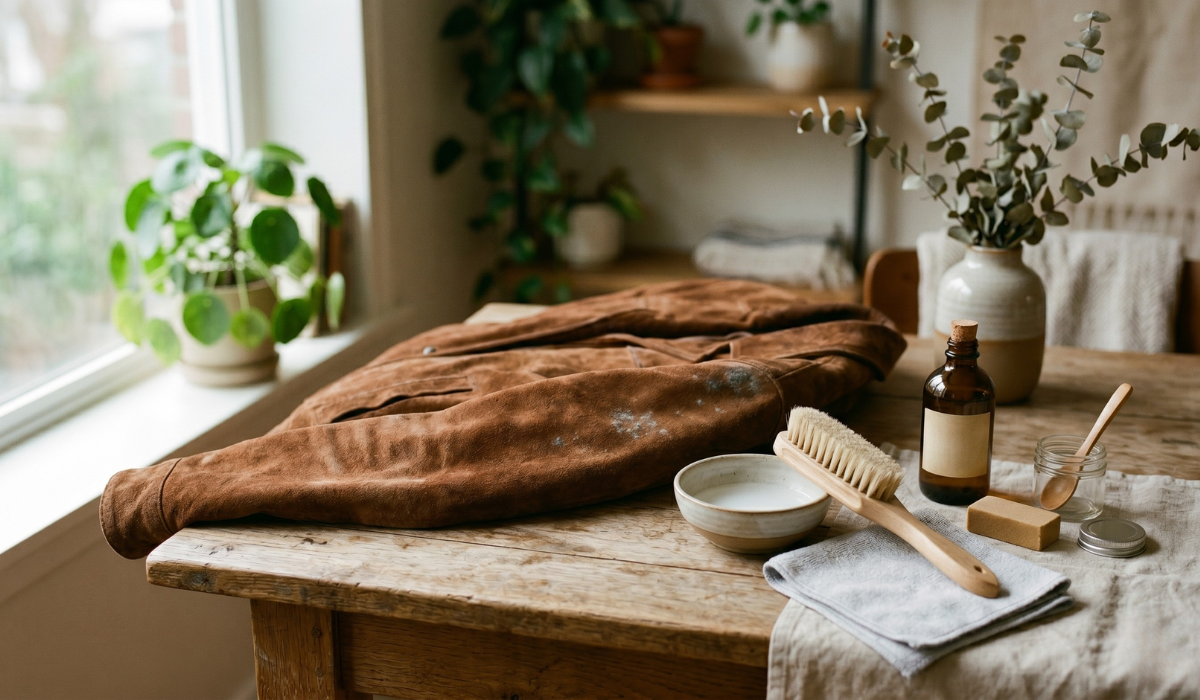
Essential Supplies Checklist
Before you begin, gather your supplies. Having everything ready ensures you can work steadily without leaving any cleaning solution on the leather for too long.
- A Specialized Suede Brush: Features stiff synthetic/natural bristles on one side and rubber cleaning nubs on the other.
- A Suede Eraser: A specialized crumbly block designed to lift embedded surface stains and dried mold roots.
- White Distilled Vinegar: A gentle, natural acid that kills up to 82% of mold species without bleaching the leather.
- Isopropyl Rubbing Alcohol (70%): Great for severe mold cases, but must be used sparingly and diluted.
- Clean Microfiber Cloths: White or un dyed cloths are best to avoid transferring dyes onto your jacket.
- A Protective Face Mask & Rubber Gloves: To prevent inhaling microscopic spores or spreading them to your skin.
- A Vacuum Cleaner with a Hose Attachment: For safely lifting away loose, dried spores.
The Step by Step DIY Home Remediation Method
Follow this systematic guide carefully. Take your time, test your solutions, and work in a well ventilated space.
Step 1: Quarantine and Safety Preparation
Never clean a moldy garment inside your main living space or near your closet. Brushing a moldy jacket releases millions of invisible spores into the air, which can land on your carpets, furniture, or other clothing, starting a brand new infestation.
Put on your face mask and rubber gloves. Take your jacket outside to a balcony, patio, or yard. If you must work indoors, choose a garage or a room with open windows, and lay down trash bags or newspapers beneath your workspace to catch falling debris.
Step 2: The Sun and Air Dry Cure
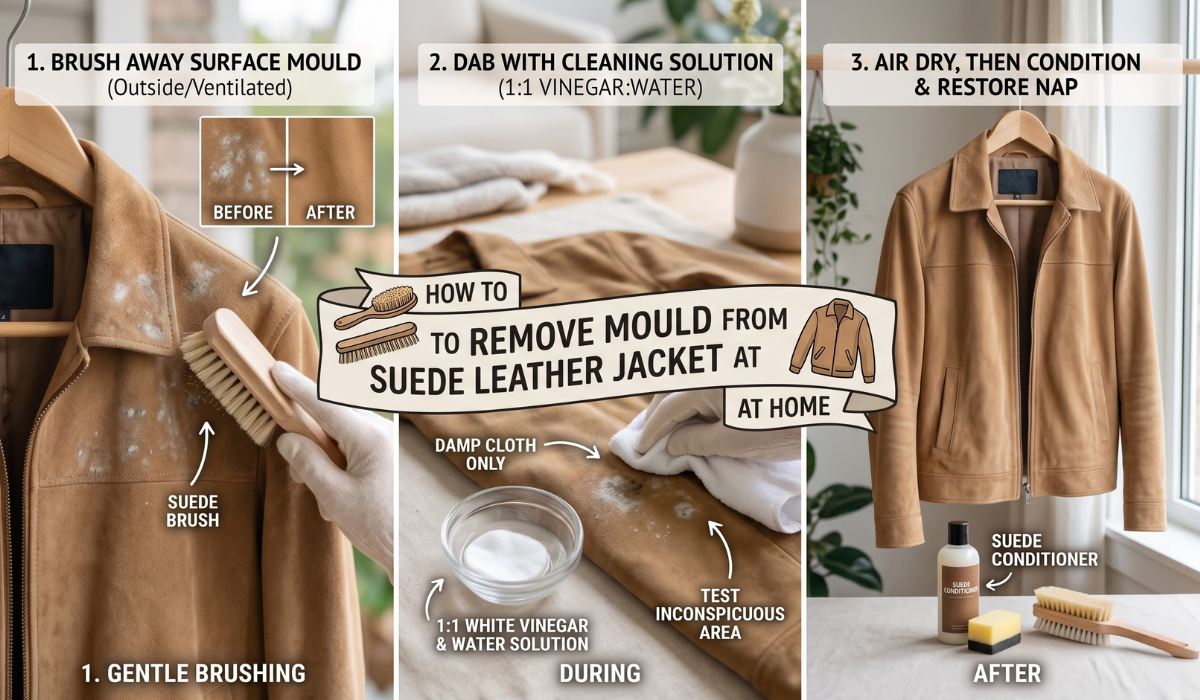
Before you start scrubbing, you need to neutralize the active, growing fungus. Mold thrives on dampness and hates UV light. Hang your suede jacket on a sturdy, wide wooden or padded coat hanger out in direct sunlight for 1 to 2 hours.
Direct sunlight naturally dehydrates the active fungus, killing off living spores and drying out the moisture that allowed them to grow. Keep an eye on it do not leave the jacket out all day, as prolonged, intense UV exposure can dry out the leather and fade the dye.
Step 3: Vacuuming the Loose Surface Spores
Once the jacket is completely dry to the touch, the mold should look powdery and dead. Take your vacuum cleaner, attach the hose tool (ideally one with a soft brush attachment), and gently hover over the affected mold patches.
Do not press the vacuum nozzle firmly against the suede, as this can grind the mold deeper into the nap. Instead, lightly skim the surface to lift away the loose, dusty top layer of dried fungus.
Step 4: Dry Brushing the Nap
Next, use your specialized suede brush. Brush exclusively in one single direction using short, gentle strokes. This lifts the fibers of the nap, exposing the base of the mold colonies.
If you see stubborn, dark spots where the mold rooted into the leather, use your suede eraser. Rub the eraser firmly back and forth over the spot. The eraser is designed to crumble away, pulling the embedded dirt and dried mold out along with it. Shake the jacket thoroughly to remove any residue.
Step 5: Spot Testing Your Cleaning Solution
If a light dusting of mold remains, or if the jacket still smells musty, you will need to use a liquid solution. You have two excellent options:
- The Vinegar Solution: Mix equal parts white distilled vinegar and clean water.
- The Alcohol Solution: Mix equal parts isopropyl rubbing alcohol and clean water.
Critical Safety Step: Always perform a spot test before applying anything to visible areas of your jacket. Dip a clean white microfiber cloth into your chosen solution, squeeze out almost all moisture until it is barely damp, and blot a hidden area like the inside of the collar or under the armpit. Let it dry completely for 20 minutes. If the color bleeds, darkens permanently, or rings form, do not proceed with that liquid solution.
Step 6: Gentle Blotting Remediation
If your spot test passes, dip your microfiber cloth back into the solution and wring it out until it is barely damp.
Gently blot the moldy areas. Never rub, scrub, or press down aggressively, as friction combined with moisture can flatten the nap and ruin the velvet texture. Work in small, controlled sections, blotting smoothly to let the natural antibacterial properties of the vinegar or alcohol neutralize the remaining fungal roots.
Step 7: The Slow Drying Phase
Once blotted, hang your suede leather jacket back up on its hanger. Place it in a cool, dry room with excellent air circulation. You can set up a standalone electric fan nearby to blow a steady stream of air across the room to speed up the process.
Never use a hair dryer, radiator, or clothing dryer to speed up the drying time. Applying direct, intense heat will warp the animal hide, shrink the panels, and ruin the fit of your jacket permanently.
Step 8: Restoring the Suede Nap
When the suede dries completely, the areas you treated with liquid will likely look flat, slightly stiff, and matted down. This is completely normal.
Take your suede brush and use the soft rubber nubs or fine bristles to brush the leather back and forth in gentle, circular patterns. This relaxes the flattened fibers and raises the nap back up, restoring the signature, velvety texture that makes premium jackets from Starlet Leathers stand out.
What to Absolutely Avoid: Common DIY Mistakes
When dealing with a delicate material like suede, knowing what not to do is just as critical as following the right steps. Avoid these common mistakes:
- Using Chlorine Bleach: Bleach is incredibly harsh. It will strip the dye out of your jacket instantly, leaving raw, ruined white patches, and will dry out the leather until it cracks.
- Washing Machines: Never throw a real suede jacket into a washing machine, regardless of the cycle setting. Saturated water exposure dissolves the tanning agents and structural integrity of the hide.
- Commercial Smooth Leather Cleaners: Creams, oils, and waxes designed for smooth leather will clog the open nap of suede, turning it into a dark, greasy, flattened mess.
- Storing in Plastic Bags: Plastic bags trap ambient moisture inside, creating a humid greenhouse environment that actively encourages mold growth.
Long Term Prevention: Protecting Your Investment
Once your jacket is completely clean, you want to make sure the mold never returns. Maintaining your leather items properly keeps them looking sharp for decades.
Use a Premium Suede Protector Spray
After clearing the mold and reviving the nap, apply a high quality, breathable suede water proofer and stain protector spray. These sprays apply an invisible, hydrophobic barrier over the nap that repels liquid water while letting the leather breathe. It prevents moisture from sinking in, cutting off the main condition mold needs to grow.
Upgrade Your Storage Environment
Never store your jackets in damp basements, attics, or dark, humid closets. Always use high quality, wide wooden hangers that support the heavy shoulders of the jacket, allowing air to circulate around it. If your closet is prone to humidity, hang a reusable dehumidifier pouch or a container of silica gel nearby to pull excess moisture out of the air.
Use Breathable Cotton Covers
If you want to protect your outerwear from everyday dust during the off season, skip the plastic dry cleaning bags. Instead, use a breathable, 100% cotton garment bag. This keeps dust off while allowing air to move freely through the fabric, preventing moisture buildup.
Frequently Asked Questions (FAQs)
Can I use baking soda to remove mold smell from suede?
Yes. Baking soda is an excellent, non toxic odor absorber. If your jacket still has a musty smell after cleaning, place the dry jacket inside a large, clean zip top storage bag or plastic bin alongside an open bowl of baking soda. Seal the bin for 24 to 48 hours. The baking soda will absorb the ambient airborne odors without ever contacting or harming the leather.
Is a moldy suede jacket safe to wear after cleaning?
Once you have thoroughly cleaned the jacket, completely dried it, and brushed away the dead spores, it is perfectly safe to wear. If you suffer from severe mold allergies or respiratory issues, ensure you are thorough with the vacuum and vinegar steps to fully neutralize any lingering allergens deep within the nap.
What if the mold is on the inner lining of the jacket?
Most premium suede jackets feature smooth inner linings made of polyester, satin, or cotton blends. If mold grows on the lining, you can clean it more directly. Turn the jacket inside out, spray a light mist of diluted white distilled vinegar onto the lining fabric, and wipe it down with a clean microfiber cloth before hanging it up to air dry.
How often should I brush my suede jacket?
For regular maintenance, give your jacket a quick brush every 3 to 4 wears. This removes everyday dust, outdoor grit, and loose dirt before they can settle deep into the nap, keeping the suede fresh and reducing organic debris that fungal spores feed on.
When should I give up and go to a professional?
If the mold on your jacket is dark black or deep green and covers more than 30% of the surface area, it may have compromised the leather hide structural integrity. In these severe cases or if you have a highly valuable heirloom jacket it is safest to take it to a professional cleaner who specializes exclusively in suede and leather restoration.
Keeping Your Leather Pristine
A quality suede leather jacket is a lifetime investment piece that only gets better with age when cared for properly. By acting quickly, avoiding harsh chemicals, and keeping your storage spaces dry and well ventilated, you can easily protect your wardrobe from mold and mildew at home.
For more expert care tips or to explore a premium collection of timeless leather jackets built to last, visit us at Starlet Leathers today.
