


Blog
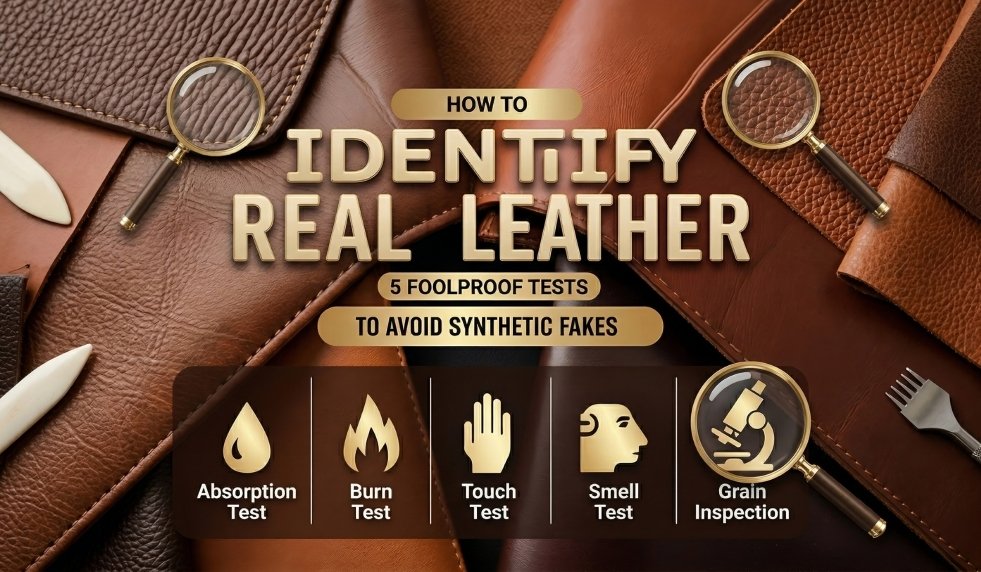
How To Identify Real Leather: 5 Foolproof Tests To Avoid Synthetic Fakes
Apr
How to Identify Real Leather: 5 Foolproof Tests to Avoid Synthetic Fakes
The smell of a new leather jacket or the supple grain of a high end sofa is unmistakable or at least, it used to be. As technology advances, vegan leather pleather and synthetic blends have become incredibly sophisticated. Today, a faux leather bag can look and even feel startlingly like the real deal, leaving many shoppers wondering if they’re getting the premium quality they paid for.
At Starlet Leathers, we believe that true quality shouldn’t be a mystery. Whether you are thrifting for vintage treasures or investing in a luxury centerpiece, knowing how to distinguish genuine hide from plastic-based imitations is an essential skill. In this guide, we’ll walk you through the science and the soul of leather with five foolproof tests.

The Fundamental Difference: Natural vs. Synthetic
Before we dive into the tests, it’s important to understand what we are comparing.
- Real Leather: An organic material made from animal hide (usually cow, sheep, or goat). It is porous, breathable, and develops a patina a beautiful sheen and softening over time.
- Synthetic Leather (PU/PVC): Man made materials constructed from a plastic base polyurethane or polyvinyl chloride bonded to a fabric backing. It is non porous and tends to crack or peel rather than age.
1. The Visual Inspection: Look for Imperfections
Think of real leather like human skin. No two hides are exactly alike. When you examine a piece of furniture or a garment, look closely at the surface grain.
- The Real Deal: Genuine leather will have inconsistent pore patterns and small flaws like scars, stretch marks, or slight variations in color. If you see a repeating pattern that looks like it was printed by a machine, it probably was.
- The Synthetic Fake: Faux leather is manufactured in large rolls. The texture is embossed using a stamp, resulting in a perfectly uniform surface. If every square inch looks identical, it’s a red flag.
Pro Tip: Look at the edges. Real leather has a rough, fibrous edge where it has been cut. Synthetic materials usually have a smooth, plastic looking edge or a visible fabric reinforcement sticking out.
2. The Touch and Feel: The Wrinkle Test
Real leather is incredibly flexible and responsive to pressure. One of the easiest ways to spot a fake is to treat it like skin.
- The Test: Press your finger firmly into the surface of the material.
- The Result: Genuine leather will wrinkle under the pressure of your thumb, much like your own skin does. When you release the pressure, the wrinkles gradually disappear. Synthetic leather usually just depresses under your finger without creating those fine, radiating micro wrinkles feeling more like pressing down on a sheet of plastic or vinyl.
3. The Olfactory Test: The Power of Scent
This is perhaps the most famous test for a reason. While manufacturers have tried to create leather scented sprays, they rarely capture the earthy, rich complexity of the real thing.
- The Real Deal: Real leather has a distinct, musky, and slightly sweet scent that is impossible to replicate perfectly.
- The Synthetic Fake: Faux leather either has no scent at all or smells distinctly like chemicals, plastic, or glue. If your leather jacket reminds you of a new shower curtain, it’s time to put it back on the rack.
4. The Absorption Test: The Water Drop
Because leather is an organic, porous material, it interacts with moisture. This is a quick and non destructive test you can do with just a single drop of water.
- The Test: Place a tiny drop of water on a flat area of the leather.
- The Result: Real leather will absorb the moisture within a minute or two, often leaving a slightly darkened spot that disappears as it dries. If the water simply beads up and rolls off without any sign of being absorbed, you are likely looking at a synthetic surface or a heavily plastic coated corrected leather.

5. The Fire Test (The Ultimate Truth)
Note: Only perform this on a hidden area or a small swatch, as it involves a flame!
If you are still unsure, the way a material reacts to heat tells the whole story.
- Real Leather: It is naturally flame resistant. If you hold a lighter to a small edge for a second, it will char slightly and smell like burnt hair. It will not catch fire.
- Synthetic Leather: Because it is made of plastic, it is highly flammable. It will curl up, melt, and smell like acrid, burning chemicals or melting plastic.
Genuine Leather vs. Synthetic: At a Glance
| Feature | Genuine Leather | Synthetic (PU/PVC) |
| Durability | Lasts decades; gets better with age | Lasts 2–5 years; tends to peel |
| Breathability | High (adjusts to body temp) | Low (can feel sweaty/sticky) |
| Maintenance | Requires conditioning | Easy to wipe clean |
| Edge Texture | Rough and fibrous | Smooth and plastic like |
Frequently Asked Questions (FAQs)
Q: Is Genuine Leather the highest quality?
Surprisingly, no. In the industry, Genuine Leather is actually a specific grade that is lower in quality than Full Grain or Top Grain. It is made from the remaining layers of the hide after the top layers are split off. At Starlet Leathers, we always recommend looking for Full Grain for maximum longevity.
Q: Does real leather always peel?
Never. Real leather may crack if it becomes extremely dry which is why you should use a leather conditioner, but it will never peel off in sheets like synthetic leather does. If it’s peeling, it’s plastic.
Q: Why does my real leather jacket feel stiff?
New, high quality leather (especially cowhide) can be stiff at first. This is a sign of thickness and durability. Over time, the fibers break in and mold to your body a process known as breaking in that synthetics simply cannot do.
Q: Is eco leather the same as real leather?
Eco leather is a broad term. It can refer to real leather tanned with vegetable dyes instead of harsh chemicals or it can be a marketing term for synthetic leather. Always check the material composition tag!
Final Thoughts
Investing in leather is an investment in time. While synthetic alternatives are cheaper upfront, they lack the soul, breathability, and forever quality of the real thing. By using these five tests, you can shop with confidence, ensuring that your next purchase from Starlet Leathers or anywhere else is the authentic quality you deserve.
Next time you see a bargain leather piece, give it the wrinkle test. Your wallet and your wardrobe will thank you.
